
Short on time? Get the key takeaways in ChatGPT →
If you run a website and decide to work with an SEO, marketing expert, or even a VA, you may need to add a user to your Google Analytics account.
Adding a user allows other people to access your Google Analytics data (without having to share your personal username or password).
This article will walk you through all the steps you need to add a user and share access to your Google Analytics account.
Step 1: Log into Google Analytics
Go to the Google Analytics website and log in. (If you don’t have a Google Analytics account yet, follow these instructions to get one set up.)
Step 2: Select the web property you want to share access to
Would you like to save this?
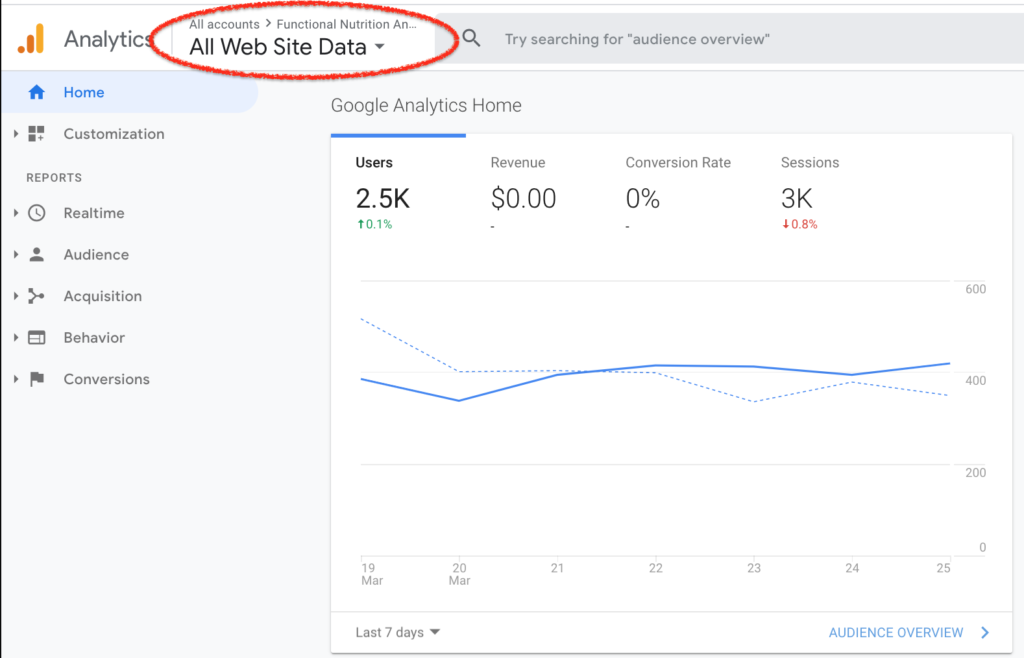
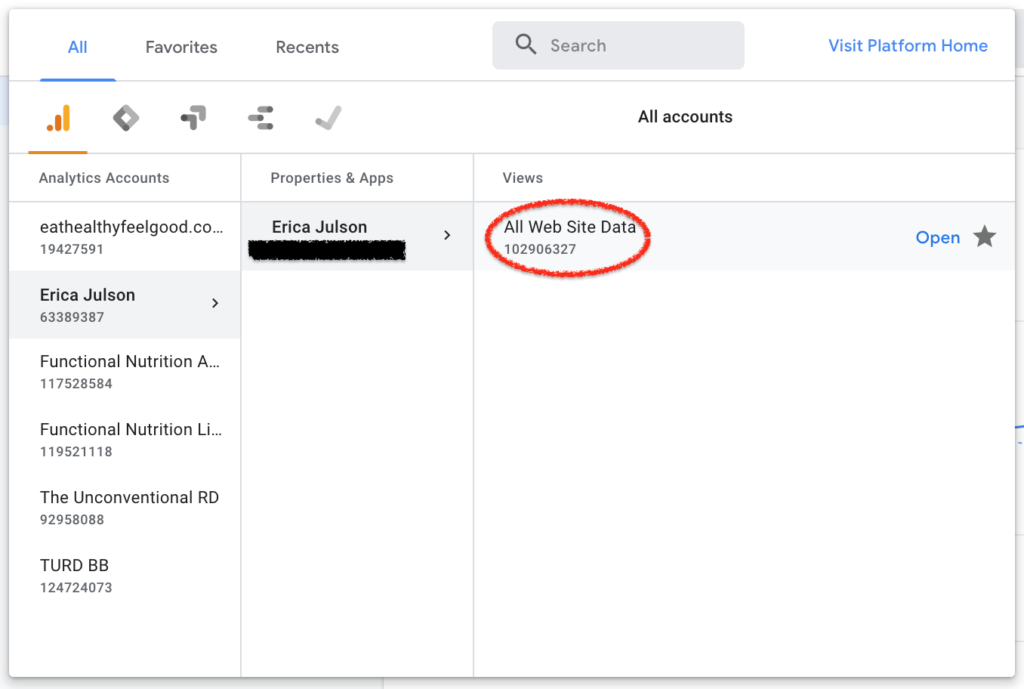
Click the drop-down menu and select the property you want to share access to:
Step 3: Go to “Admin”
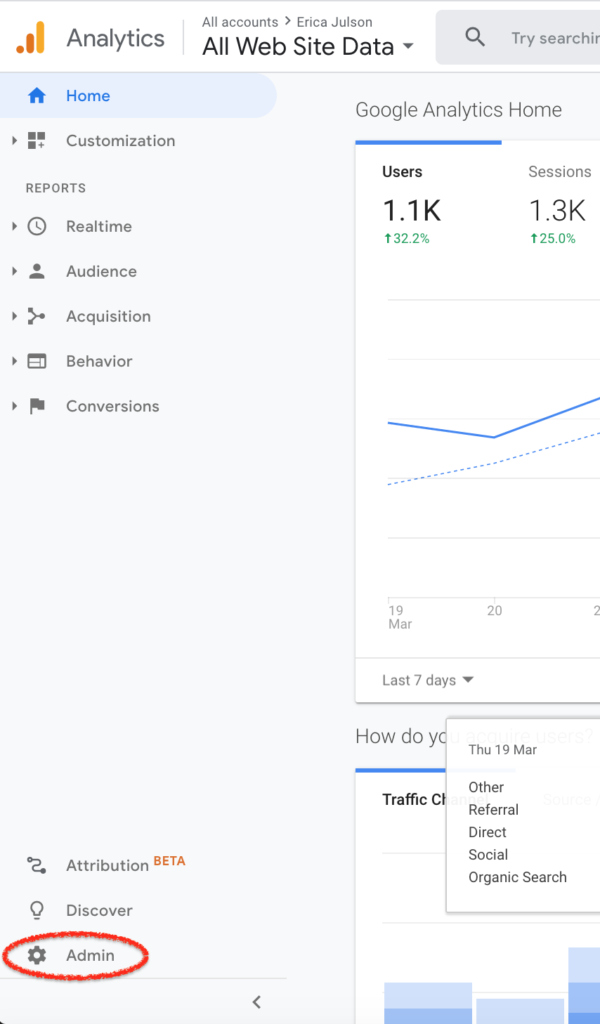
On the bottom-left, click “Admin”
Step 4: Select Property Access Management
On the next screen, under the Property section, select “Property Access Management”

Step 5: Add New User
On this screen, you will see a list of all the users who currently have access to your Google Analytics account.
Click the blue “+” sign to add a new user.

Step 6: Enter the person’s email address
Enter the email address of the person you want to give access to. {If you are sharing access with us, enter support@theunconventionalrd.com}

Keep the “Notify new users by email” box checked if you want the person to get an email letting them know they have access to your account.
Step 7: Set the user’s roles and data restrictions
Choose which level of permissions you’d like to give the new user.

Administrator gives someone FULL access to your account. Admins can perform every single action inside your account, including adding and removing users. Typically, you only want yourself and other co-owners to have this level of access. Hired help should almost never be given administrator access in GA4 (because theoretically, they could remove you from your own account.)
Editor access allows the user to do everything inside this Google Analytics property except add and remove users. (Note: They can still see the users inside your property, just not edit them.) Some SEO/analytics experts will want this level of access if they need to adjust your account settings as part of their workflow (for example, setting up cookie consent tools).
Marketer access allows the user to edit audiences, create and track events, specify key events, set up attribution models, and use lookback windows, but they cannot adjust your property settings or data streams. Most marketing managers will want this level of access since it allows them to track full funnel behavior and connect your data to Google Ads if needed.
Analyst allows the user to explore the data you are already tracking, but they cannot set up events (which are used to track things like email sign-ups, conversions, etc.). This would be appropriate for a junior-level assistant who wants to learn how to read and monitor Google Analytics data without setting up any tracking themselves.
Viewer access is the default. It allows someone to view your Google Analytics data, but they are not able to create dashboards, events, filters, etc. This is basically a “view only” mode & is most appropriate when you want someone to be able to read, but not work on, your Google Analytics data. For example, you might give an intern or an AI platform “viewer” access so that they can read your data, but not perform any work for you inside your account.
None gives the user no access to this specific property inside your account. (But they may still be given access to other properties inside your account.)
If you are giving us access to your account, please provide us with EDITOR access.
If you wish to hide information about your ad spend or revenue from a user, you may do so within the “Data Restrictions” area:

Step 8: Click “Add”
Click “add” in the upper right-hand corner. Then congrats – you’re done!

Verify that the new user is listed under property permissions.

The person you gave access will receive an email confirming that they now have access to your account.

Optional: Remove Access
If you ever want to remove someone’s access to your Google Analytics account, simply click the 3 dots to the right of the user’s name and select “Remove access”.

Put this post to work
Not sure where to start? Click a button and let AI turn this post into your to-do list.

Erica Julson is a registered dietitian turned digital marketing pro.
She has over 15 years of experience blogging and building online businesses and has taught over 1,000 wellness professionals inside her programs.
Since starting out online, Erica has earned over $1 million dollars in revenue and built 5 different blogs. She now uses her knowledge to help others succeed in the online space, via her YouTube channel, podcast, blog, Facebook group, and online course.
Transparency and integrity are amongst her core values and you'll love her personable, down to earth teaching style.